
The 2026 international football tournament represents a major multi-country sporting event scheduled for that year. It involves multiple host nations, a network of stadium venues, an adjusted competition format with an expanded number of teams, and a coordinated qualification path for national teams. This article describes how host selection, stadium deployment, tournament structure, match scheduling, and fan logistics typically interact in a single large-scale edition of an international football championship held across several countries.
Key components include the responsibilities shared by the host federations, the role of venue categories (main stadiums versus support grounds), and the competition phases from group play through the final stages. Organizers often publish a match schedule that balances travel, rest days, and broadcast windows. Qualification systems are usually run by continental confederations and may combine group leagues, play-offs, and continental allocation rules to produce the final tournament field.
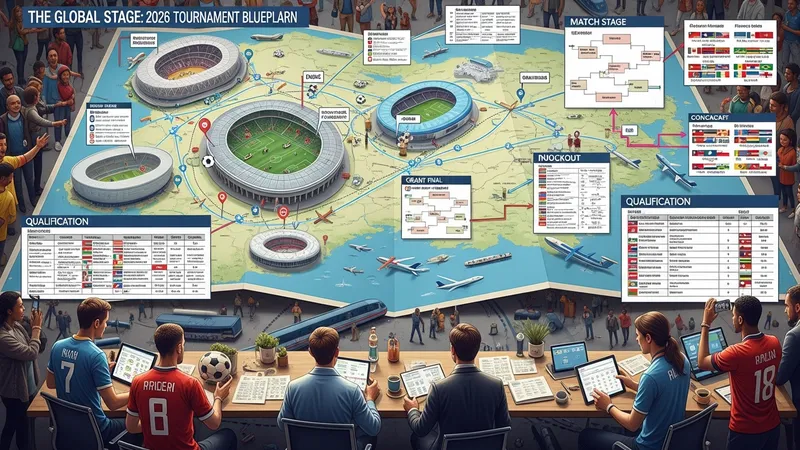
Host nation coordination may involve formal agreements that define which federation is responsible for specific matchdays, visa facilitation, and policing arrangements. In multi-country editions, transport corridors and entry points between nations are typically planned well in advance so teams and officials can move with predictable itineraries. Legal and logistical frameworks can be negotiated through memoranda of understanding between football governing bodies and national authorities, and these documents commonly outline venue commitments and contingency provisions for match relocation or schedule changes.
Venue classification and preparation often require staged investments in stadium facilities and surrounding infrastructure. Main stadiums assigned for later-stage matches generally meet higher capacity and broadcast technical standards, while secondary venues host group-stage fixtures and training sessions. Organizers frequently assess elements such as pitch drainage, media facilities, team locker rooms, and spectator access when confirming venue readiness. Transport connectivity, including public transit and road access, typically influences which cities host multiple matches.
Tournament format components can shape competitive dynamics and scheduling density. An expanded field often leads to more groups and additional matchdays, which may require more venues and extended competition windows. Organizers commonly design group sizes and progression rules so that a consistent number of teams advance from each group to the knockout stage; tie-breaker procedures and potential play-off rounds are typically defined in the tournament regulations. These choices may affect how rest days are distributed and how venues are allocated across rounds.
Qualification systems are coordinated by continental confederations and the central governing body; pathways commonly combine league-based stages, regional groups, and intercontinental play-offs. Allocation of qualification slots per confederation is often determined years in advance and can be adjusted to reflect changes in the overall tournament size. National federations usually plan their competitive calendars around these qualification windows, and contingency rules are typically included to resolve scheduling conflicts or match postponements.
Fan experience planning frequently covers ticketing frameworks, fan zones, transportation guidance, and safety protocols. Organizers and local authorities may publish recommended arrival times, security screening procedures, and accessible services for attendees. Hospitality arrangements and broadcast scheduling can also influence kick-off times, and venue-level crowd management plans often coordinate with local emergency services. These measures may evolve during event preparation to reflect operational learnings and public health guidance where relevant.
In summary, staging a multi-nation international football tournament in 2026 entails coordinated host agreements, venue readiness across categories, a tailored competition format, and an integrated qualification mechanism. Each of these components interacts with scheduling, travel, broadcast, and fan services in predictable ways that organizers commonly plan for years in advance. The next sections examine practical components and considerations in more detail.
Host nation selection for a multi-country event typically involves formal bids evaluated against infrastructural, financial, and operational criteria. Evaluation panels often review stadium quality, transport networks, accommodation capacity, security planning, and legacy objectives. When multiple countries host together, the submission commonly details cross-border coordination mechanisms and shared responsibilities. Selection decisions may be influenced by past hosting experience and demonstrated capacity to stage matches across several cities, and the resulting agreement usually outlines which federation hosts specific rounds or the final.

Hosting across several countries often requires harmonized regulations for visas, customs for team equipment, and simplified transit corridors for match-related travel. Authorities generally negotiate protocols that may include fast-track processing for accredited personnel and coordinated security arrangements at international entry points. Such measures typically aim to reduce friction for teams and officials while maintaining compliance with national laws. Organizers may also set up centralized operations centres to manage scheduling, incident response, and inter-federation communication during the tournament.
Financial and operational commitments are frequently detailed in hosting agreements and can include guarantees about stadium readiness, public safety staffing, and broadcaster accommodations. These commitments may also state the responsibilities for transport enhancements or temporary infrastructure. Host federations commonly work with national and local governments to align public services and law enforcement. Contingency funding and insurance mechanisms are often identified to address risks such as severe weather or unexpected venue unavailability.
Stakeholders typically consider legacy impacts when selecting hosts, including planned stadium upgrades, long-term community benefits, and anticipated tourism flows. Legacy planning may outline how investments in transport, training facilities, and youth development programs are intended to persist after the event. These elements are commonly part of bid assessments and may influence decisions about which cities are chosen as primary or secondary venues within each host nation.
Stadiums for major international tournaments are often categorized by role: primary venues for late-stage matches, intermediate venues for knockout rounds, and support venues for group-stage fixtures and training. Each category typically carries different technical and operational standards related to capacity, broadcast facilities, lighting, and pitch quality. Organizers commonly require inspections and certification processes to confirm that each stadium meets specified criteria before final match assignments are published, and remedial plans may be requested for any deficiencies found during these checks.

Accessibility and transport proximity are common determinants in venue selection. Cities with multiple international transport links and robust local transit systems are often favoured for hosting clusters of matches, as these factors can reduce travel times for teams and fans. Parking, pedestrian routes, and designated drop-off zones are usually assessed alongside stadium entry and exit flows. Event planners frequently model spectator movements to identify bottlenecks and recommend operational changes that may improve arrival and departure times on matchdays.
Broadcast and media requirements typically shape technical retrofits to venues, including dedicated camera positions, mixed zones for interviews, and high-capacity data links. Stadiums intended for later-stage matches commonly need enhanced broadcast compounds and hospitality spaces for delegations and media. Organizers often coordinate with host broadcasters to verify signal routing and redundancy plans to ensure live transmission capability under varied conditions. These arrangements can influence which stadiums are assigned to high-profile fixtures.
Pitch maintenance and training facilities also form a key part of venue readiness. Groundskeeping plans that specify turf types, irrigation, and post-match recovery schedules are commonly submitted as part of venue accreditation. Training sites for competing teams are usually required to match certain dimensions and surface quality standards, and travel time between accommodation and training sites is often limited in planning guidelines. These considerations help maintain competitive fairness and player welfare throughout the tournament.
An expanded tournament field can lead to modified group-stage formats such as additional groups of similar size or preliminary rounds to reduce the field before a standard group phase. Organizers may set rules for how many teams advance from each group and specify tie-break criteria like goal differential, head-to-head records, and disciplinary points. A clearly defined knockout bracket is typically published in advance so teams and broadcasters can plan logistics; contingency rules for match postponement or venue changes are usually included in tournament regulations.
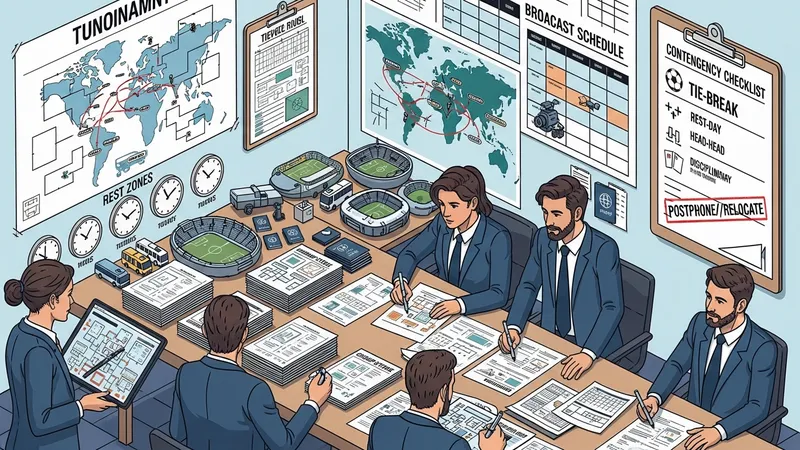
Scheduling commonly balances competitive fairness with recovery needs, often targeting at least two or three rest days between matches for teams depending on the stage. Match windows are frequently organized to accommodate global broadcast markets, which can affect local kickoff times. When matches are spread across countries, travel times and time-zone differences are considered to reduce undue fatigue. Tournament planners may cluster group matches geographically to minimize cross-border travel for teams during the early rounds.
Seeding and draw procedures influence competitive balance in the group stage. Seedings often use world rankings or qualifying performance to distribute higher-placed teams across different groups. Draw events generally follow transparent rules set by the governing body and may include restrictions to avoid multiple teams from the same confederation being placed in a single group, depending on allocation policies. These mechanisms aim to create balanced group compositions while respecting continental representation guidelines.
Knockout-stage procedures typically include extra time and penalty shoot-outs to decide matches that cannot end in a draw, with rules defining substitution allowances and technical staff credentials. Match assignment logic for the knockout bracket usually maps group positions to specific match slots to maintain a coherent path to the final. Organizers also publish match officials' selection processes and VAR (video assistant referee) protocols in the competition regulations to promote consistency across venues.
Qualification pathways to the final tournament generally involve continental competition structures, which may include group leagues, single-match play-offs, and intercontinental fixtures. Allocation of slots per confederation is typically predetermined and can be adjusted to reflect changes in tournament size. National federations plan domestic calendars to allow for qualification windows, and international match scheduling often follows coordinated windows established by the central governing organization to reduce conflict with club competitions.
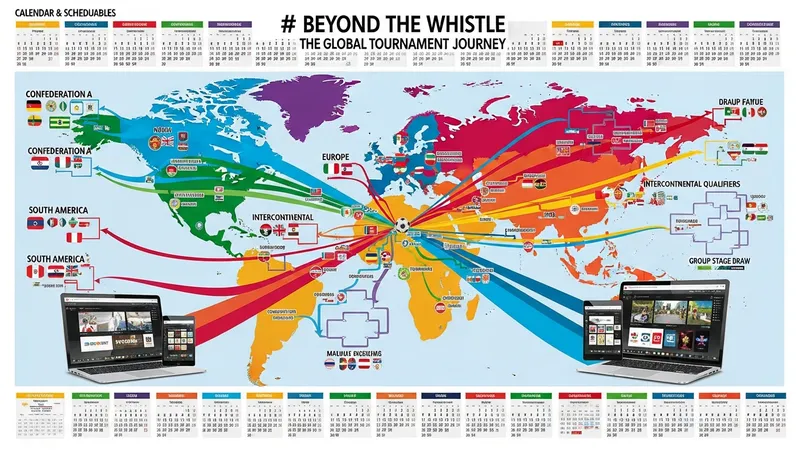
Match scheduling at the tournament level also interfaces with television markets and local conditions such as climate. Organizers may stagger kick-off times to maximize global broadcast reach while ensuring suitable playing conditions for athletes. For multi-country events, coordination between host federations often establishes standard matchday protocols, including training access, media obligations, and accreditation distribution, to provide consistent experiences for teams and officials across different host cities.
Fan experience measures commonly address ticket distribution policies, venue access, and information services to assist attendees in navigating multi-city travel. Fan zones, travel guidance, and official transport partners are typically described in event guides produced by organizers. Accessibility services, such as designated seating and assisted transport options, are usually included to support diverse fan needs. These elements are planned with input from local authorities and disability advocacy groups to align with regulatory requirements and community expectations.
Operational considerations for large multi-country tournaments often include contingency planning for weather, public health updates, or security incidents. Event plans typically outline escalation procedures, communication channels, and joint response arrangements between host federations and local emergency services. These measures are designed to maintain continuity of the competition while prioritizing safety and logistical feasibility, and they commonly form part of pre-event testing and rehearsal activities leading up to the tournament.