
Online systems for structured skill-building combine course content, pathways that sequence learning, and interfaces that present progress and credentials. These systems are designed to help learners move from foundational concepts to applied tasks through modules, assessments, and documented outcomes. The core concept centers on integrating instructional design, content delivery, and evidence of competence so that an individual can track development over time and access relevant learning artifacts.
Key components typically include curated sequences of courses (often called learning paths), methods for verifying skill attainment (certificates, badges, or microcredentials), interactive study tools (labs, simulations, or coding sandboxes), and dashboards for monitoring progress. Platforms may also support multiple delivery modes — self-paced, cohort-based, or blended — and connect to external credentials or employer verification systems to signal attainment.

One common comparison among these examples is how they structure learning sequences. Some platforms present linear learning paths that require completing prerequisite modules before advancing, while others allow free navigation across modules. This design choice can affect learner motivation and completion rates; linear paths may promote a clearer progression but can feel restrictive to experienced learners, whereas open catalogs may enable targeted upskilling but require more self-regulation.
Certification and credentialing practices vary and may influence how employers or institutions interpret attainment. Verified certificates often involve identity checks and fee-based validation, whereas digital badges or microcredentials can represent specific skills demonstrated through projects or assessments. Credentials may be portable through standards like Open Badges, and platforms may integrate with registries or LinkedIn-style profiles to make achievements visible.
Interactive features and assessment types typically shape the depth of skill development a platform can support. Automated quizzes are useful for knowledge checks, while peer review, capstone projects, and sandbox environments often provide better proxies for applied competence. The presence of project-based evaluation may correlate with stronger evidence of practical ability, though such assessments can require more instructor or reviewer resources to scale.
Accessibility and user experience factors often determine whether learners complete longer paths. Mobile-friendly interfaces, clear navigation, readable content, and accommodations for diverse learners (captions, transcripts, keyboard navigation) may improve inclusivity. Analytics and progress-tracking dashboards can help learners and managers identify gaps, but they work best when paired with clear milestone definitions and realistic time estimates.
In summary, platforms that support structured skill development combine sequenced learning, verifiable credentials, interactive assessments, and UX features that help learners navigate and monitor progress. Choices about sequencing, credential type, assessment depth, and accessibility often shape how effectively a platform supports meaningful skill growth. The next sections examine practical components and considerations in more detail.
Different platform types address distinct learning needs: marketplace aggregators, university-hosted platforms, and specialist skills services each prioritize different features. Marketplace-style platforms may prioritize breadth of topics and flexible enrollment, while university-hosted systems often emphasize academic rigor and credit-recognition pathways. Specialist platforms focus on assessment tools and role-aligned content. When comparing feature sets, look at course taxonomy, support for learning paths, integrated assessment types, and the availability of hands-on environments such as labs or coding sandboxes.
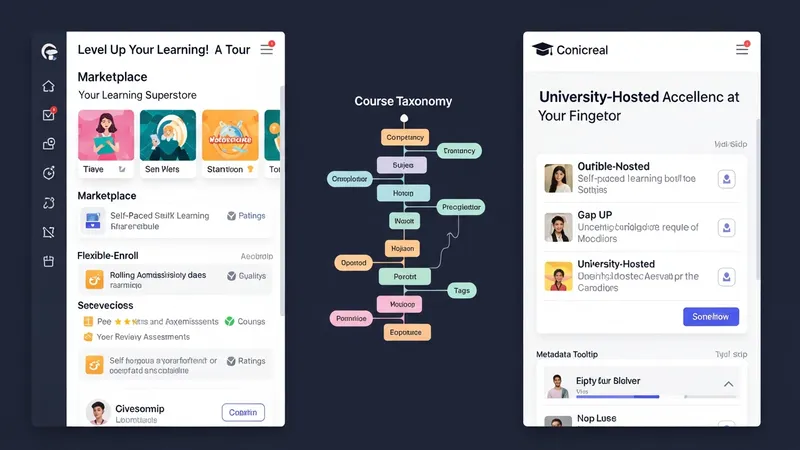
Catalog organization and search/filter capabilities typically influence discoverability. Platforms that tag content by competency, role, or skill cluster may help learners assemble coherent paths without manual sequencing. Metadata practices can vary; some providers expose explicit competency maps and prerequisites, which may make path planning more transparent. These organizational features often affect how quickly a learner can identify a sequence that aligns with a learning goal.
Integration options are a practical consideration for institutions and learners who expect credential portability. Many platforms offer APIs, single sign-on, or LMS connectors that enable enrollment and tracking across systems. Support for interoperability standards (SCORM, xAPI) can facilitate learning record exchange, though implementation quality varies by provider. Organizations often weigh integration complexity against the benefit of centrally tracking learner progress across multiple offerings.
Pricing models and access conditions commonly differ: subscription, per-course fee, or institution-licensed access each creates different incentives for path completion. Subscription models may encourage exploratory learning, while per-course pricing can make learners selective. Institution licensing can provide broader access for cohorts. Transparent information about time commitment, assessment structure, and credential recognition typically helps learners estimate whether a given platform aligns with their needs and constraints.
Learning paths usually sequence content from foundational to advanced topics and may include milestones such as assessments or projects. Path design commonly incorporates prerequisites, modular units, and estimated effort per module. Effective paths often mix microlearning units for concept recall with longer capstone activities for synthesis. Designers may map competencies to modules to clarify what a learner can expect to demonstrate on completion, and some platforms provide competency frameworks that can be exported or aligned with external standards.
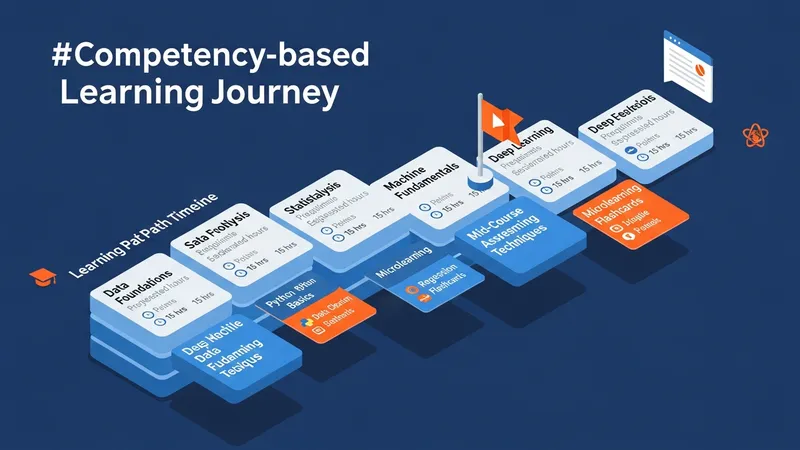
Credential types vary in granularity and validation method. Certificates issued after course completion often indicate course-level achievement, while microcredentials and digital badges can represent discrete competencies. Verification methods may involve identity checks, proctored assessments, or project review. Employers and institutions may interpret credentials differently; therefore, the context accompanying a credential—such as assessment type, project artifacts, and rubrics—can influence perceived value.
Path flexibility may be implemented through electives, modular stacking, or credit transfer options. Stacking allows learners to accumulate smaller credentials toward a larger credential, which can enable incremental skill recognition. Path designers sometimes include optional elective modules to allow specialization within a broader sequence. These structures can accommodate differing learner goals, from exploratory skill development to targeted upskilling for a specific role.
Assessment design is central to credential credibility. Objective quizzes are scalable for knowledge checks, while performance tasks, portfolios, or peer-reviewed projects may provide more direct evidence of applied skill. Rubrics and exemplar work help standardize evaluation. Platforms that document assessment criteria, provide feedback mechanisms, and retain artifacts (code samples, design files, written reports) can create richer records of learner competence for later review by employers or educational institutions.
Interactive learning tools range from in-browser code editors and lab sandboxes to simulation environments and scenario-based branching. These tools can support active learning by enabling practice and immediate feedback. Their value often depends on alignment with intended outcomes; for procedural skills, sandboxes may be especially useful, while conceptual skills may benefit from scenario simulations. Platform support for saving work, versioning, and exporting projects contributes to evidence of learning.
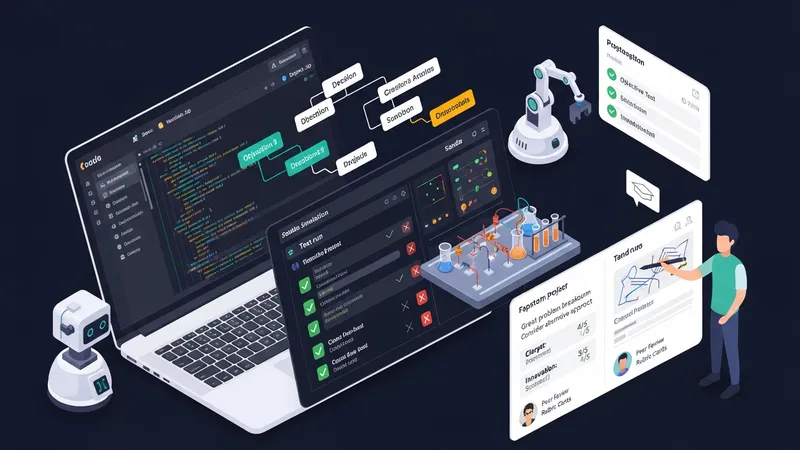
Assessment approaches commonly combine automated and human-reviewed elements. Automated grading is efficient for objective items and code correctness checks, whereas human review supports evaluation of open-ended tasks and design thinking. Peer assessment may scale human evaluation, but it requires clear rubrics and moderation to maintain reliability. Some platforms support capstone projects that undergo instructor or mentor review, often accompanied by written feedback and scoring against predefined criteria.
Progress-tracking features typically include completion percentages, time-on-task estimates, and milestone badges. Analytics dashboards for learners and managers may display trends, weak areas, and completion forecasts. Learning record standards such as xAPI can enable richer tracking of learning activities outside traditional course boundaries. Transparent metrics and clear milestone definitions may help learners plan study time and verify progress toward credentialing.
Data privacy and record portability are practical considerations when tracking progress. Platforms vary in how they store and share learner data and whether learners can export records or transcripts. Privacy controls, consent mechanisms, and clear data-retention policies are important for learners who want to retain control over their learning artifacts. Institutions and employers often examine these policies when integrating platform data with internal systems.
Usability factors include intuitive navigation, consistent layout, and clear labeling of modules and assessments. A coherent onboarding process that explains the path structure and expected time commitment can reduce confusion. Mobile accessibility often matters for learners who study in variable contexts; responsive design and downloadable resources may support flexible study. Performance considerations—fast loading times and efficient media handling—can materially affect engagement, especially for learners with limited bandwidth.

Accessibility features should align with widely adopted standards such as WCAG and include captions, transcripts, scalable text, and keyboard navigation. Platforms that provide multiple content formats—video, text, and interactive exercises—may better accommodate diverse learning preferences and needs. Localization and language options can expand reach; platforms that support translated captions, localized interfaces, or region-specific examples often reduce barriers for non-native speakers.
Community and support mechanisms can influence sustained engagement in learning paths. Forums, study groups, and moderated cohorts enable peer interaction and feedback, which may enhance learning outcomes for collaborative tasks. Mentoring or tutor support, when available, can assist with complex projects but requires resource planning. Clear escalation pathways for technical or academic support help maintain momentum when learners encounter obstacles.
When evaluating delivery approaches, consider scalability and sustainability. Self-paced content scales widely but may show lower completion rates without structured milestones. Cohort-based offerings can improve completion through scheduled interaction, while blended models combine online content with live facilitation. Each delivery mode may suit different learning objectives and audiences; examining completion patterns and learner feedback can inform iterative improvements to content and platform configuration.