
Tools designed to manage an accounting practice typically combine scheduling, task tracking, client records, and workflow orchestration into a single environment. These systems aim to structure recurring engagements, route tasks among staff, and maintain a clear record of work in progress. At their core they create predictable sequences for common activities such as tax preparation, bookkeeping cycles, and financial review, allowing staff to know what to do next and where a client engagement stands.
Such platforms often expose configurable templates, status-driven task lists, and notifications to reduce manual coordination. They can integrate with time tracking or billing modules so that task progress and staff effort are measurable. Rather than replacing accounting tools, these practice management environments generally act as an operational layer that coordinates tasks, stores engagement documentation, and preserves handoffs between roles.
When comparing the example platforms, firms may consider the scope of workflow templates, how tasks are assigned and visualized, and whether the system supports a central shared inbox or threaded collaboration. Each example tends to emphasize different operational points: some focus on template-driven repeatability, others on threaded team communication, and others on client-facing portals. Decision factors often include the degree of customization available and how the system integrates with timekeeping or ledger software.
Integration patterns often influence how a practice uses these systems. Platforms that connect with bookkeeping or tax engines can reduce duplicate data entry, allowing client information to flow between engagement workspace and accounting tools. Typical integrations include single sign-on, calendar sync, and export/import of client contact and engagement records. Integration quality may affect adoption and the amount of manual reconciliation required to keep records aligned.
Task automation within these environments can cover recurring activities, status transitions, and reminder scheduling. Automation often works through templates or rule engines that generate a sequence of tasks for a given engagement type. Automation may reduce administrative overhead but usually requires initial setup and periodic maintenance to reflect changes in firm processes. Practices commonly pilot automation on a few recurring engagements to refine templates before wider rollout.
Reporting and visibility components frequently include dashboards that show upcoming deadlines, overdue tasks, and staff workload. These visual summaries are typically configurable to show firm-wide metrics or individual team member queues. Reporting may also tie to time-tracking so managers can analyze the relationship between planned tasks and actual hours logged. Firms often use these insights to balance workloads and adjust staffing or scheduling practices.
The next sections examine practical components and considerations in more detail. Each subsequent page expands on a core aspect of these operational platforms, covering feature categories, client and engagement functions, reporting and scheduling mechanics, and collaboration and security considerations.
Feature sets for workflow and task organization usually fall into distinct categories: task and status management, automation and templates, scheduling and calendar integration, and communication channels. Task and status management gives a clear view of work items and their progress; automation and templates help repeat common processes; scheduling connects tasks to firm calendars; and communication channels support internal handoffs. Firms commonly assess these categories together because strengths or gaps in one area may affect the usefulness of the others.
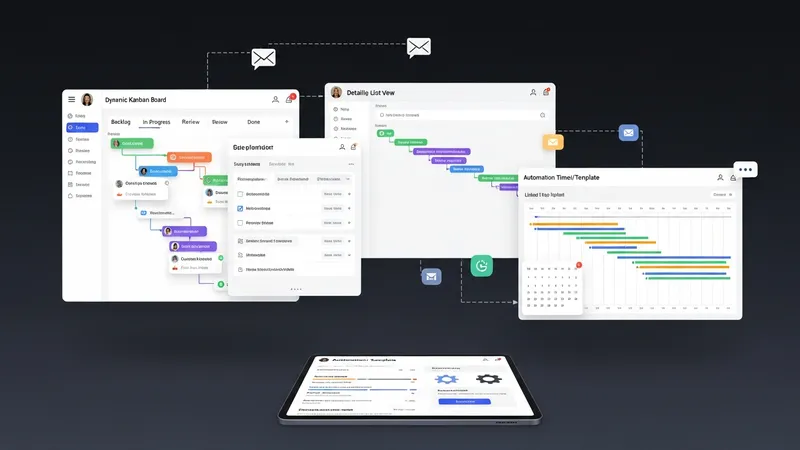
Task lists often support assignments, due dates, and status fields that can be customized to match a practice’s lifecycle stages. Some systems implement kanban-style boards, while others use list or timeline views. The choice of view may influence how easily staff adapt their daily routines: visual boards can aid quick triage, while lists may suit linear, step-driven engagements. Examples introduced earlier illustrate different emphases on these patterns.
Automation typically relies on templates that generate task groups for recurring work such as monthly bookkeeping or annual tax returns. Templates may embed conditional steps, dependencies, and reminders; they may also create checklist items that staff must complete before a task advances. Jetpack Workflow and similar platforms often offer template-driven automation, which firms may tailor to reflect compliance workflows or client-specific variations.
Scheduling and calendar synchronization permit tasks to appear on staff calendars and link deadlines to external calendar systems. This alignment may reduce missed deadlines and help managers forecast resource needs. Calendar integration quality varies, with some systems providing two-way sync and others offering one-way export. Practices often evaluate how scheduling aligns with client meetings, internal milestones, and external filing deadlines.
Client and engagement management functions provide a centralized record of client information, engagement history, and current work items. These features may include contact records, engagement notes, document repositories, and a history of communications. Platforms like Canopy emphasize client portals and secure file exchange, while Karbon provides threaded communication tied to client records. Centralization helps reduce duplicated data and supports continuity when staff change or when multiple users contribute to a file.
Client portals and secure document exchange help structure incoming and outgoing items and create an auditable trail for document handling. Portals may allow clients to upload files, view task status, and exchange secure messages. This reduces reliance on email for sensitive attachments and can streamline the intake of tax documents or client-supplied records. Firms typically review authentication options and retention policies when evaluating portal features.
Engagement records commonly store templates, checklists, and client-specific instructions so that recurring work can be re-created with consistent steps. These templates may include client-facing documents such as engagement letters or internal checklists that guide preparers through steps like reconciliations and review. Maintaining engagement templates can help maintain quality and ensure that regulatory or firm-specific procedures are applied consistently.
CRM-like capabilities sometimes appear within practice platforms to track leads, communications, and engagement pipeline stages. While not a substitute for dedicated sales tools, these lightweight CRM features may help practices monitor potential engagements, track conversion activities, and coordinate follow-up tasks. Integrations with standalone CRM systems can extend functionality where needed.
Reporting modules provide aggregated views of work status, utilization, and deadlines. Dashboards typically surface overdue tasks, upcoming deliverables, and staff capacity metrics. Time-tracking data may feed into reports so managers can compare planned versus actual hours for engagements. These metrics often guide operational adjustments such as redistributing workloads or refining template time estimates to better reflect real effort.
Scheduling systems within practice platforms may include intake queues, milestone timelines, and calendar overlays that display firm-wide commitments. Milestone timelines help visualize multi-step engagements and external deadlines. Some systems support resource allocation features that predict staff capacity based on assigned tasks and estimated durations. Firms often simulate scheduling scenarios to understand likely bottlenecks before committing to major process changes.
Custom reports may be exportable in common formats so practices can further analyze data in spreadsheet or business intelligence tools. Standard reporting templates often cover task aging, staff productivity, and client backlog. Practices frequently adapt reporting frequency and scope—daily operational summaries for teams, weekly rollups for managers, and monthly metrics for firm leadership—to match decision rhythms.
When assessing reporting and scheduling, practices may consider data retention, report customization, and the ease of exporting datasets. The ability to filter by engagement type, staff member, or client can make reports more actionable. Firms often iterate on reporting configurations to surface the most relevant operational indicators without creating unnecessary complexity.
Collaboration features in practice platforms commonly include shared inboxes, threaded discussions, document comments, and activity feeds that record changes. These tools aim to reduce fragmented communications and preserve context when several staff work on the same engagement. Systems may enable mentions or notifications to draw attention to specific items without relying on external email, improving coordination for mid-sized teams.
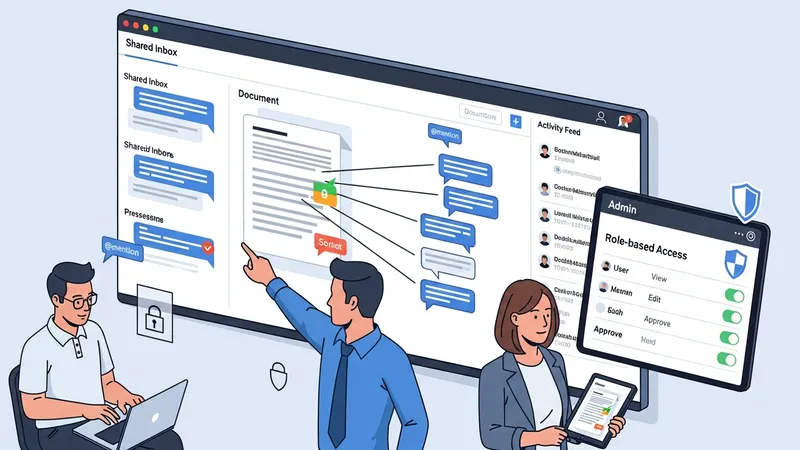
Permissions and role-based access control are central to protecting client information while enabling collaboration. Permissions typically allow administrators to define who can view, edit, or approve items at the client or engagement level. Audit trails and activity logs can show who changed a record and when, which firms may use for internal reviews or to support compliance requirements.
Data security and encryption practices are commonly documented by vendors and include transport-layer encryption, encrypted storage, and secure authentication options such as multi-factor authentication. Practices often review vendor security documentation, data residency policies, and third-party audit reports to understand how client data is handled. Aligning security configurations with firm policies is an important operational consideration.
Integrations and APIs facilitate connections to accounting systems, document storage, and identity providers, but they also introduce considerations around authorization and data flow. Practices may evaluate which integrations are necessary and how they affect data sharing, backup, and incident response processes. Careful configuration and periodic review of integrations help maintain a balance between productivity gains and data governance.