
This article explains recent shifts in Australian visa policy and the associated application guidance relevant to 2026. It focuses on how rule updates, administrative adjustments, and procedural clarifications may affect eligibility assessment, documentation expectations, and processing steps for people seeking entry or residence in Australia. The description emphasizes observable policy components rather than personal advice; readers can use the explanations to form questions for officials or migration advisers where appropriate.
The information below outlines common categories of change and procedural considerations that have surfaced in public announcements and regulatory updates. It covers categories such as adjustments to labour-focused visa frameworks, refinements to health and character checks, and administrative moves toward more digital submissions and biometrics. This coverage is intended to clarify the types of changes that may appear in guidance issued by Australian authorities.
One common axis of policy change involves the skilled migration framework where point allocations, eligible occupations, and pathways to permanent residence may be revised. Such changes often reflect labour market assessments and cross-government priorities and may be announced with transition measures that affect applicants differently depending on timing and visa subclass. Observers may note that amendments typically include published lists and explanatory materials from the immigration authority to guide applicants and sponsors.
Employer-sponsored visa rules may be updated to refine sponsor obligations, training benchmarks, or evidence standards for skill levels and employment history. These refinements can alter the documentary burden for employers and applicants and may change probationary conditions or visa durations. Public guidance often clarifies how existing visas are affected and whether transitional provisions apply for those already in Australia.
Health and character assessment protocols may be clarified or extended, including which medical checks are required and the standards for police clearances from certain countries. Authorities may adjust which applicants need full medical examinations versus chest x-rays or other targeted checks. Likewise, character checks may involve more explicit guidance on assessed indicators and acceptable documentation, which can affect processing timelines.
Administrative changes toward greater digital processing may include expanded online forms, mandatory electronic identity verification, and increased use of biometrics at designated collection points. These shifts can affect how documents are submitted, whether original documents are requested at later stages, and how applicants track progress. Processing time estimates are often updated in official resources to reflect administrative capacity and seasonal demand.
In summary, the concept described here covers regulatory and procedural updates that may affect visa eligibility, documentation, and processing during 2026 for Australia-bound applicants. The discussion emphasizes observable policy categories rather than prescriptive steps. The next sections examine practical components and considerations in more detail.
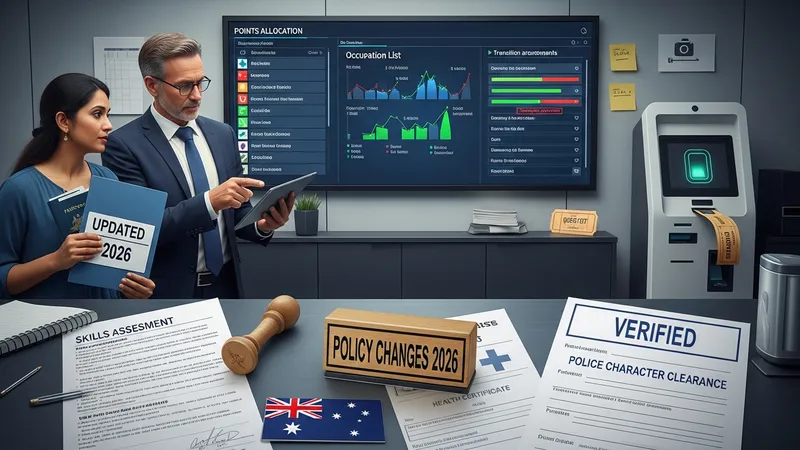
Policy announcements that influence visa arrangements typically address several categories: eligibility criteria, sponsored pathways, health and character requirements, and administrative processes. Eligibility criteria adjustments can include changes to points allocation, required qualifications, or relevant work experience thresholds. Sponsored pathways may see revisions to sponsor obligations and evidence standards. Health and character protocols can be updated to reflect public health assessments and international reporting. Administrative process changes often involve digital lodgement standards, document verification workflows, and biometric requirements. These categories form the main axes along which applicants and sponsors may experience differences in 2026 procedures.
When authorities revise lists of eligible occupations or point weightings, the practical effect may vary by occupation and applicant profile. For instance, an occupation moved between skill levels may alter the evidence required for a skills assessment. Such changes typically include transition arrangements that specify whether in-progress applications are affected. Observers may consult official occupation lists and migration advice to see how particular roles are classified and whether recent updates include explanatory notes for transition.
Updates to sponsorship and employer-related conditions commonly clarify training benchmarks, labour market testing expectations, and ongoing compliance monitoring. Sponsors may be asked to supply more detailed workplace documentation or training records in some cases. These clarifications can change the administrative tasks for sponsoring organisations and the supporting documentation that visa applicants must provide. Public guidance may provide examples of acceptable documentary formats or thresholds for demonstrating employer obligations.
Administrative digitalisation measures often aim to reduce reliance on paper but can introduce new verification steps such as two-factor identity checks or remote biometric capture. While such changes may streamline some interactions, they can also require applicants to prepare certified electronic copies or use certified translation services when documents are not in English. Official processing time pages are a reference point to observe how administrative changes affect throughput and typical waiting periods.
Application procedures are often revised alongside policy changes to ensure alignment with new eligibility or evidentiary standards. Typical procedure updates include new online form fields, revised document checklists, or clarified guidance on certified copies and translations. Applicants may need to submit evidence of qualifications, employment records, and identity documents in specified formats. For some visa subclasses, certified skills assessments from recognised assessing bodies remain central. Official guidance usually lists the required documents and the accepted formats to reduce requests for further information during processing.
Document certification and translation requirements may be emphasised more strongly as administrative systems move online. Many applicants find that certified copies from recognised authorities or sworn translations are requested when originals cannot be uploaded. Where skills assessments are required, applicants often must arrange assessments through specified assessing authorities and provide those reference numbers within the online application. Because requirements can differ by visa subclass, applicants typically match their supporting evidence to the subclass guidance provided on official pages.
Biometrics and identity verification steps may be positioned as a mandatory part of the application lifecycle for an increasing number of visa types. Collection points and methods can vary by country of residence; applicants can check official lists of biometric collection centres and their booking procedures. Where biometrics are required, applicants often receive instructions after the lodgement of the primary application and may need to attend a designated facility within a specified timeframe to avoid delays.
Processing time estimates may change as administrative practices evolve; therefore, published processing ranges on official government websites typically reflect current capacity and demand. Applicants may see broad ranges that vary by visa subclass and by whether additional health or character checks are required. Officials may publish guidance on how additional requests for information are handled and how these requests can extend total processing timeframes.
Eligibility frameworks may be updated in response to labour market analyses, demographic trends, or broader migration objectives. Key elements in eligibility assessment often include age limits, occupational relevance, qualifications recognition, English language levels, and assessed work experience. For points-tested pathways, changes to point allocation can affect how different applicant profiles are scored, although any published changes usually include transition rules. Eligibility checks may also incorporate recent policy clarifications concerning family composition, partner assessments, or dependent inclusions.
Skills assessments remain central for many pathways and may be updated to reflect changing occupational standards or training requirements. Assessing authorities often publish the criteria for recognition, including required documentation, acceptable qualifications, and relevant work experience. Applicants commonly need to match their evidence to the assessor’s published requirements; when criteria change, assessing authorities may release guidance on retrospective evaluation of qualifications and experience.
English language proficiency requirements are often specified per visa subclass and may include accepted test types and minimum scores. Authorities can change accepted test providers or minimum thresholds to align policy with workforce needs. Where language requirements are adjusted, official guidance generally indicates whether previously submitted results remain valid and how applicants can demonstrate exemption or alternative evidence where applicable.
Character and health standards may be clarified in policy updates, including which applicants must obtain police checks from specified jurisdictions and which medical examinations are required. These clarifications can affect applicants differently depending on travel history and health screening results. Official guidance often outlines the forms of acceptable documentation for character checks and the medical forms or clinics recognised for visa health assessments.
Processing factors that commonly influence timelines include application completeness, seasonal demand, the need for external assessments (skills, police, or medical), and the applicant’s responsiveness to requests for further information. Administrative shifts toward electronic lodgement can change where and when applicants submit materials, and may reduce some processing friction while introducing new verification steps. Observers may note that external events—such as public health policy changes or international events—can also alter processing bandwidth and typical wait times.
Travel planning considerations relate to how visa validity dates, entry conditions, and bridging arrangements are affected by processing timelines. Where provisional or temporary visas are involved, applicants may need to account for phased permissions or conditions tied to sponsorship or employment. Official visa grant notices typically specify entry validity and any conditions attached to travel; applicants may plan travel around those parameters but should remain aware that grant timing can vary.
Applicants who must complete health or character checks may need to schedule medical appointments or obtain police clearances from multiple jurisdictions, which can add weeks to overall timelines. Planning for these steps in advance, based on official checklists, may reduce avoidable delays. Where biometrics or interviews are required, applicants should confirm local collection options and any booking lead times via official channels to align travel or relocation plans with administrative requirements.
Finally, authorities sometimes provide transitional guidance when a new policy takes effect, specifying how existing applications are treated and whether retrospective measures apply. Staying aware of published transition arrangements and official explanatory materials can assist in understanding potential impacts on intended travel or relocation timelines. This overview aims to clarify factors that often shape processing and planning for applicants in 2026.